
Dying for that tee.
Second only to the fossil fuel industry, the fashion industry is the biggest contributor to greenhouse gases and industrial processes that pollute our planet. Every year the textile industry produces about 80 billion garments- all of them with a large environmental cost.
There is a long list of processes involved in creating our clothes. One of the most harmful is colouring and dying. Greenpeace states that the most commonly used additives in the dyeing process are dangerous to humans, marine life AND the environment.
Azo dyes, responsible for 60-70% of all dyes, create high intensity hues and are a proven carcinogenic. Over time the dyes on our clothes evaporate, becoming part of the air that we breathe and are absorbed through our skin.
Fast fashion companies openly admit the health risks that their clothes pose to the consumer, in the small print, for those who care to look.
Pretty Little Thing’s website states that some of its products ‘may contain chemicals known to cause cancer and birth defects.’
Still, they look cute. Right?
But this is the end of the story, not the beginning. Companies in the UK are obligated to adhere to waste management standards that protect our local environment from harm, however the vast majority of clothes purchased in the UK are made elsewhere. In China it is estimated that a shocking 90% of groundwater is polluted and according to the World Bank - 72% of the toxic chemicals are from textile dying. This is having a significant effect on the landscape and those who live there.
Due to pollution, the Baiji dolphin, an ancient species of river dolphin, which has lived in China’s Yangzte River for over 20 million years, was declared extinct in 2006. This comes just 50 years after more than 400,000 chemical enterprises opened up along the rivers edge to support the demands of the modern world, using the river as an outlet for their toxic waste. The river, which is the 3rd longest river in the world, previously teemed with life supporting over 4,000 species and produced 40% of the world’s freshwater fish. Its most recent rating on the Index of Biological Integrity is the worst possible score of ‘no fish’ pronouncing the river dead. The Yangzte is now one of the most heavily polluted rivers in the world swallowing approximately 23 billion tonnes of toxic and sewage waste a year.
Made in China doesn’t sound so great now, does it?
Wildlife however, is not all that is affected.
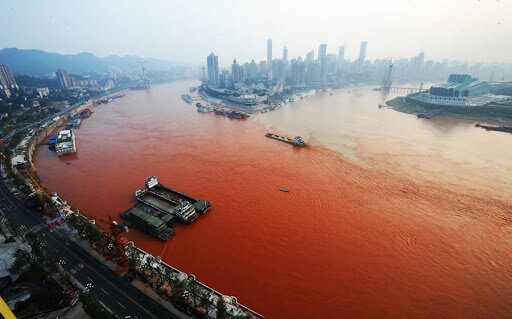
In Indonesia, where environmental policies are not enforced, the landscape is similar. Numerous textile factories line the Citarum River and dump chemical waste into the once freshwater, turning the water blue, then red, then neon green - depending on which colour is in most demand for the upcoming season.
Approximately 35 million people still rely on the river for drinking water but due to the high concentration of dye, the water is the direct cause of increased cancer rates, skin disease, birth defects and stunted mental development in children.
Better dyeing techniques are now possible, along with water purification systems that protect the planet from the harmful effects of dyes meaning this does not need to be our future. But the fashion industry is reluctant and change is slow. The ever increasing demands of fast fashion and a consumerist culture means that the rate of pollution produced by the textile industry is not slowing down. Cheap, throw-away clothes wont wait for the planet and the devastating effects they cause are ignored and unaccounted for.
Dolphins and children have died for that £3 t-shirt. Happy with the price?